Archives
- 2026-07
- 2026-06
- 2026-05
- 2026-04
- 2026-03
- 2026-02
- 2026-01
- 2025-12
- 2025-11
- 2025-10
- 2025-09
- 2025-03
- 2025-02
- 2025-01
- 2024-12
- 2024-11
- 2024-10
- 2024-09
- 2024-08
- 2024-07
- 2024-06
- 2024-05
- 2024-04
- 2024-03
- 2024-02
- 2024-01
- 2023-12
- 2023-11
- 2023-10
- 2023-09
- 2023-08
- 2023-07
- 2023-06
- 2023-05
- 2023-04
- 2023-03
- 2023-02
- 2023-01
- 2022-12
- 2022-11
- 2022-10
- 2022-09
- 2022-08
- 2022-07
- 2022-06
- 2022-05
- 2022-04
- 2022-03
- 2022-02
- 2022-01
- 2021-12
- 2021-11
- 2021-10
- 2021-09
- 2021-08
- 2021-07
- 2021-06
- 2021-05
- 2021-04
- 2021-03
- 2021-02
- 2021-01
- 2020-12
- 2020-11
- 2020-10
- 2020-09
- 2020-08
- 2020-07
- 2020-06
- 2020-05
- 2020-04
- 2020-03
- 2020-02
- 2020-01
- 2019-12
- 2019-11
- 2019-10
- 2019-09
- 2019-08
- 2019-07
- 2019-06
- 2019-05
- 2019-04
- 2018-11
- 2018-10
- 2018-07
-
Despite the significant increase in
2021-05-06
Despite the significant increase in Bdnf1 mRNA levels after DNMT inhibition, the expression of Bdnf4 and Bdnf9 was unaltered. It is particularly surprising that Bdnf4 is not affected by the DNMT inhibitor, as the promoter of the Bdnf4 exon is known to be susceptible to epigenetic changes (Kotera et
-
br Acknowledgements This work was supported by grants from
2021-05-05

Acknowledgements This work was supported by grants from Agence Nationale de la Recherche (ANR CAPHE) and from Ligue contre le Cancer. We acknowledge the continuous support of CNRS and the University of Strasbourg. We thank the technical assistance of the “Plateforme de Chimie Intégrative de Stras
-
The second constraint indicates that if the relationship bet
2021-05-05
The second constraint indicates that if the relationship between two components A and B is two-way, then there are at least two connectors, one with origin A and destination B, and another connector with origin B and destination A (OCL2 of Fig. 4). Therefore, at least one output port of the first co
-
br Transparency document br Introduction The
2021-05-05
Transparency document Introduction The cyclic nucleotide adenosine 3′,5′-cyclic monophosphate (cAMP) exerts both an endothelium-dependent and an endothelium independent vasorelaxant action in rat prostanoid [1]. cAMP direct, endothelium-independent vasorelaxant effects have been attributed to
-
In summary EP signaling modulates heteromeric kainate
2021-05-05
In summary, EP1 signaling modulates heteromeric kainate receptors at multiple steps, both sensitizing mice to kainate-evoked status epilepticus and, separately, exacerbating the downstream consequences of status epilepticus. These results, together with those of Serrano et al. (2011) and Jiang et al
-
Several effective strategies have been
2021-05-05
Several effective strategies have been developed to design activatable MR probes according to the Solomon, Bloembergen and Morgan (SBM) theory, including modulation of the number of inner-sphere water molecules (q), the rotational tumbling time (τ) and the residence lifetime of inner-sphere water mo
-
KJ Pyr 9 sale In addition to EGFR other
2021-05-05
In addition to EGFR, other receptor tyrosine kinases (RTKs) also play roles in the tumor progression under hypoxia, especially hepatocyte growth factor receptor (cMet) (Le et al., 2012). Our data suggested that unlike EGFR, hypoxia had no apparent effect on cMet KJ Pyr 9 sale (data not shown), sugge
-
Previously we showed that MS a
2021-05-05
Previously, we showed that MS-10, a combined extract of Cirsium japonicum var. Maackii (Maxim.) Matsum. (Korean milk thistle) and Thymus vulgaris L., increases the efficiency of estrogen in the estrogen-deficient state by activating the estrogen receptor (ER). MS-10 increased bone mineral density (B
-
br Significance Our understanding of the ubiquitin biology
2021-05-05

Significance Our understanding of the ubiquitin biology has been rapidly expanding. The role of the ubiquitin system in the pathogenesis of numerous disease states has increased the interest in finding new strategies to pharmacologically interfere with the enzymes responsible of the ubiquitinatio
-
A structural explanation for how RBR
2021-05-05
A structural explanation for how RBR RING1s handle their bound E2~Ubs differently from canonical RINGs has not been readily apparent. Only a few residue positions are strongly conserved in RING and RING1 domains, most of which are zinc-coordinating Cys and histidine residues. A key position in canon
-
br Assessing DUB activity The
2021-05-05
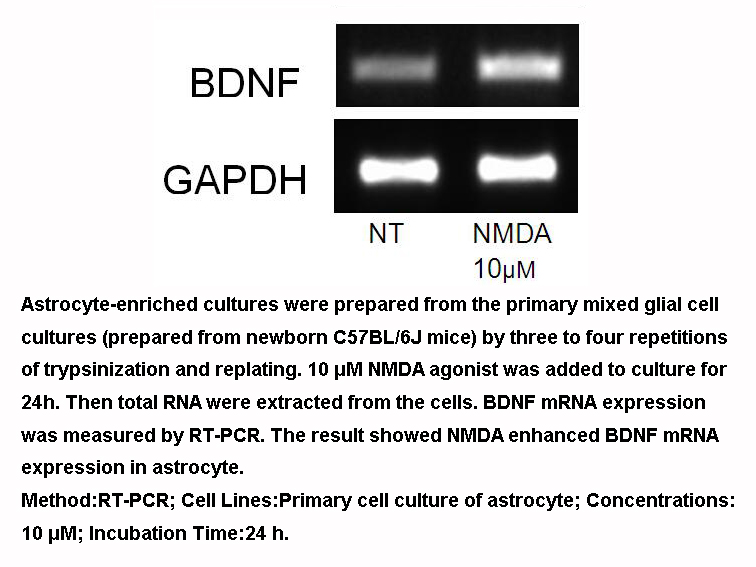
Assessing DUB activity The Ub field has benefited greatly from the past efforts of biochemists and chemical biologists who have reconstituted Ub signals in vitro and generated tools for capturing or measuring DUB activities, many of which can be readily produced or are commercially available (Ekk
-
If the unwanted objects detected
2021-05-05
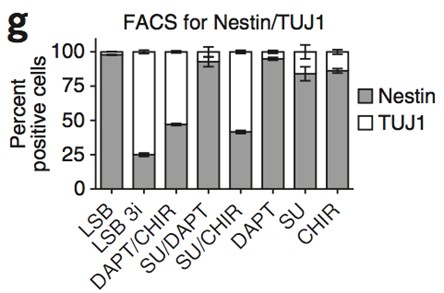
If the unwanted objects detected by OpenComet are manually deleted, and then the DNA (%) in tail is computed, the performance of the present method can be compared more effectively. Therefore, performance of OpenComet is analysed in two ways as Approach 1 and Approach 2. Approach 1, considers the DN
-
AS-605240 Hedamycin isolated from Streptomyces griseoruber b
2021-05-05
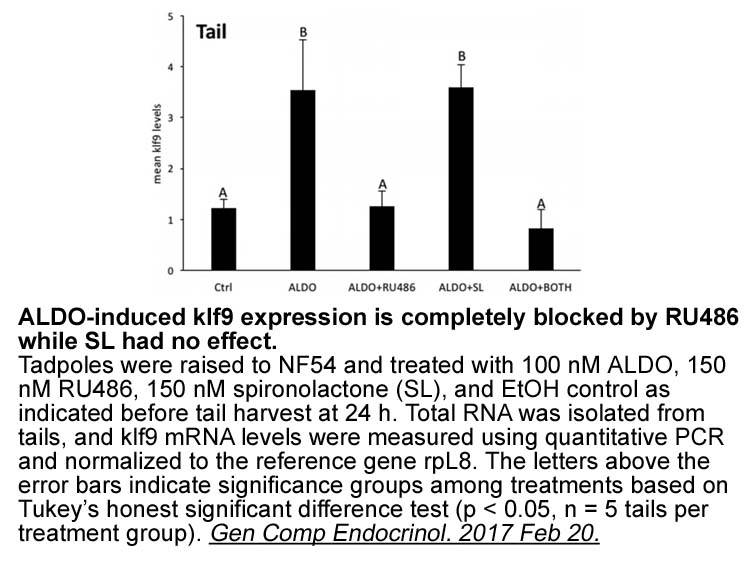
Hedamycin, isolated from Streptomyces griseoruber, belongs to the highly cytotoxic pluramycin class of AS-605240 (Figure 3(c)). It consists of a planar anthrapyrantrione chromophore attached to two amino sugar rings at one end and a bisepoxide-containing side-chain at the other end (Figure 3(c)). H
-
Introduction Quassinoids are natural products formed through
2021-05-05
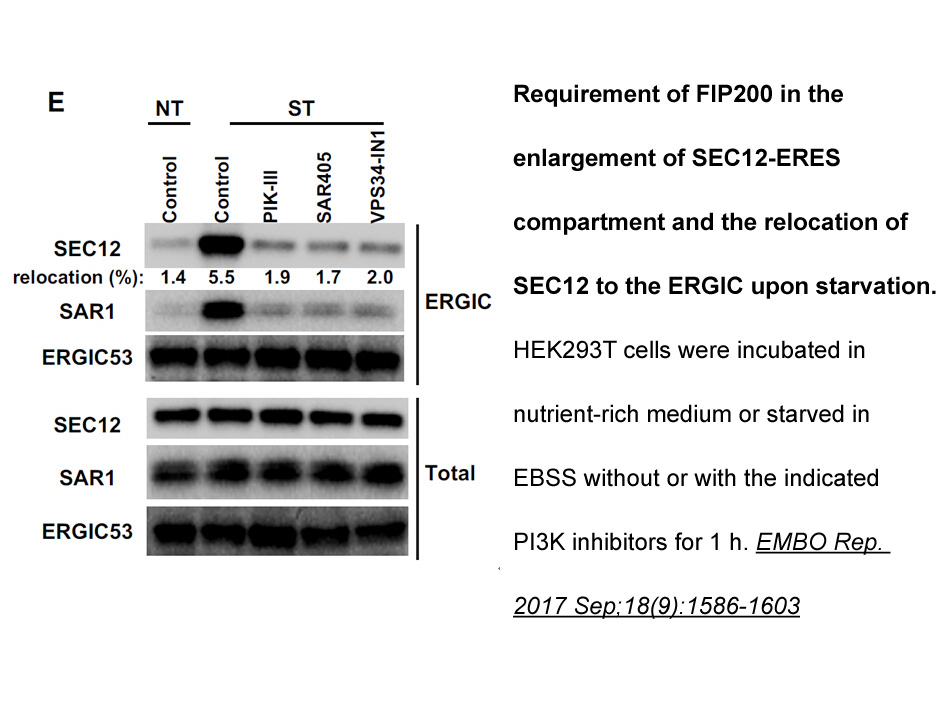
Introduction Quassinoids are natural products formed through the oxidative degradation of triterpene derivatives with anti-inflammatory, antimicrobial, antineoplastic, and antiplasmodial effects (Chakraborty and Pal, 2013; Houël et al., 2013). They are characteristic ingredients of the family Simar
-
Sulfo-NHS-SS-Biotin Trk receptors critically support the dev
2021-05-05
Trk receptors critically support the development and maintenance of the nervous system, , but their over-expression in various neural and non-neural neoplasms such as breast, pancreatic, lung and neuroendocrine tumors also confers aggressive phenotypes to tumor Sulfo-NHS-SS-Biotin and correlates w
16876 records 705/1126 page Previous Next First page 上5页 701702703704705 下5页 Last page